Running an ecommerce business today is more complicated than simply launching a website and waiting for orders. Online stores now manage inventory across multiple channels, process hundreds of customer interactions, handle logistics, update financial records, and synchronize operations in real time.
Without a connected system, businesses quickly face problems like:
- Inventory mismatches
- Delayed order fulfillment
- Accounting errors
- Poor customer experience
- Manual data entry
- Scaling limitations
This is where ecommerce website integration with ERP becomes essential.
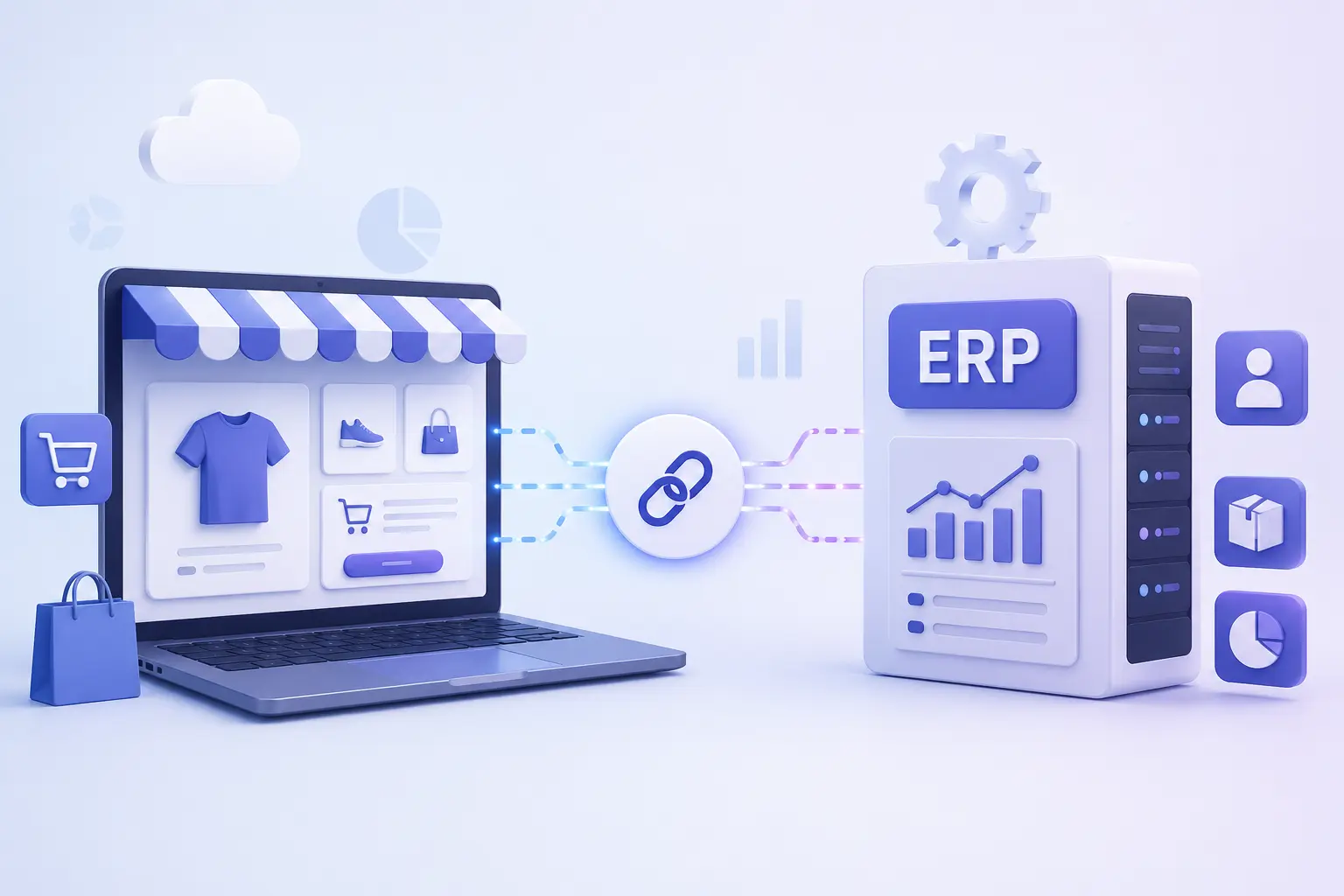
An ERP (Enterprise Resource Planning) system connects your ecommerce platform with critical business operations like inventory, finance, CRM, supply chain, warehouse management, and reporting.
Instead of juggling disconnected software tools, ERP integration creates a centralized operational system that automates workflows and improves business efficiency.
In this guide, you’ll learn:
- What ecommerce ERP integration actually means
- Key benefits for online businesses
- Common integration challenges
- Best ERP systems for ecommerce
- Real-world examples
- How to choose the right integration partner
- Future ERP trends for 2026 and beyond
What Is Ecommerce Website Integration with ERP?
Ecommerce website integration with ERP refers to connecting your online store with an ERP system so business data flows automatically between platforms.
For example:
| Ecommerce Platform | ERP System |
|---|---|
| Shopify | NetSuite |
| WooCommerce | SAP Business One |
| Magento | Microsoft Dynamics |
| BigCommerce | Odoo ERP |
Once connected, information syncs automatically, including:
- Orders
- Inventory
- Customer data
- Shipping details
- Invoices
- Accounting records
- Product catalogs
This eliminates repetitive manual tasks and reduces operational errors.
How ERP Integration Works in Ecommerce
Basic Workflow Example
Here’s a simple example of ERP integration in action:
Step 1: Customer Places an Order
A customer purchases a product from your ecommerce website.
Step 2: ERP Receives Order Data
The ERP system automatically receives:
- Customer information
- Payment details
- Product SKU
- Shipping information
Step 3: Inventory Updates in Real Time
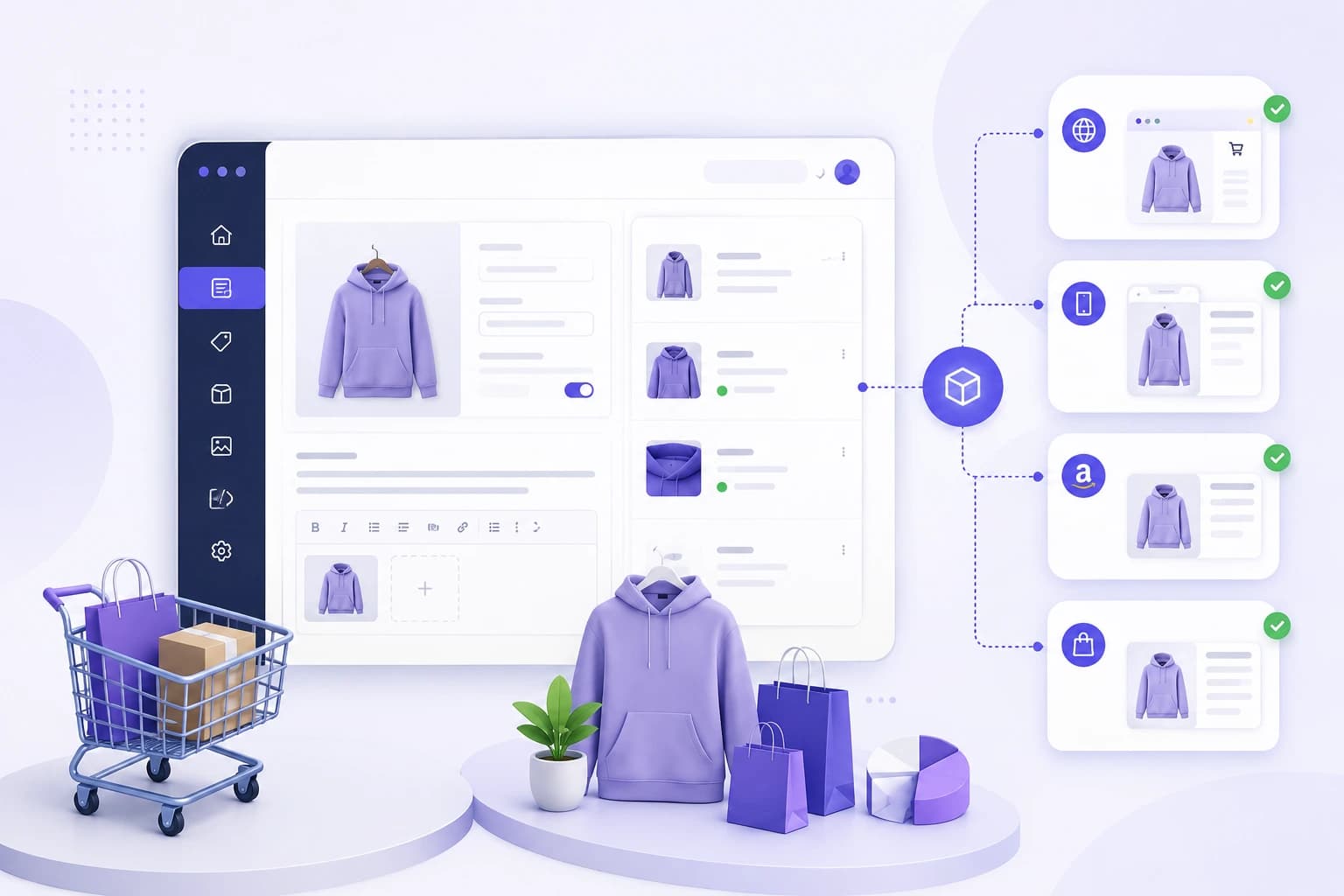
The ERP instantly updates stock levels across:
- Website
- Warehouse
- Marketplace channels
- Retail systems
Step 4: Accounting Is Updated
Sales data automatically enters your accounting module.
Step 5: Shipping & Fulfillment Sync
Shipping providers receive order information automatically. This automation dramatically improves operational efficiency.
Key Benefits of Ecommerce ERP Integration
1. Real-Time Inventory Management
Inventory errors are one of the biggest ecommerce challenges.
ERP integration helps businesses:
- Prevent overselling
- Track stock in real time
- Manage multiple warehouses
- Reduce dead stock
For businesses selling across Shopify, Amazon, and physical stores, synchronized inventory becomes critical.
2. Faster Order Processing
Manual order management slows growth.
With ERP integration:
- Orders sync instantly
- Invoices generate automatically
- Shipping workflows automate
- Fulfillment becomes faster
This improves delivery speed and customer satisfaction.
3. Better Financial Accuracy
Many ecommerce businesses struggle with accounting inconsistencies.
ERP integration automatically syncs:
- Taxes
- Sales records
- Refunds
- Expenses
- Payment reconciliation
This reduces human error and simplifies financial reporting.
4. Improved Customer Experience
Customers expect:
- Accurate stock availability
- Fast shipping
- Real-time updates
- Smooth returns
ERP-powered ecommerce systems help businesses deliver all of these consistently.
5. Scalable Business Operations
As businesses grow, manual systems break.
ERP integration supports:
- Multi-store management
- Omnichannel selling
- International expansion
- B2B ecommerce operations
This creates long-term scalability.
Common Ecommerce Platforms Integrated with ERP
Shopify ERP Integration
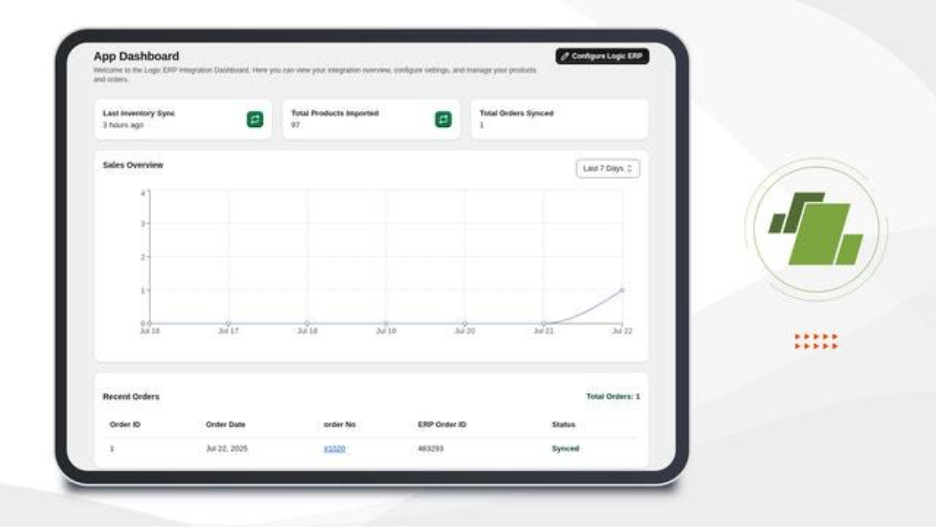
Shopify businesses often integrate ERP systems for:
- Inventory synchronization
- Accounting automation
- Warehouse management
- Order tracking
Popular ERP systems for Shopify:
- NetSuite
- Odoo
- Acumatica
- Microsoft Dynamics
WooCommerce ERP Integration
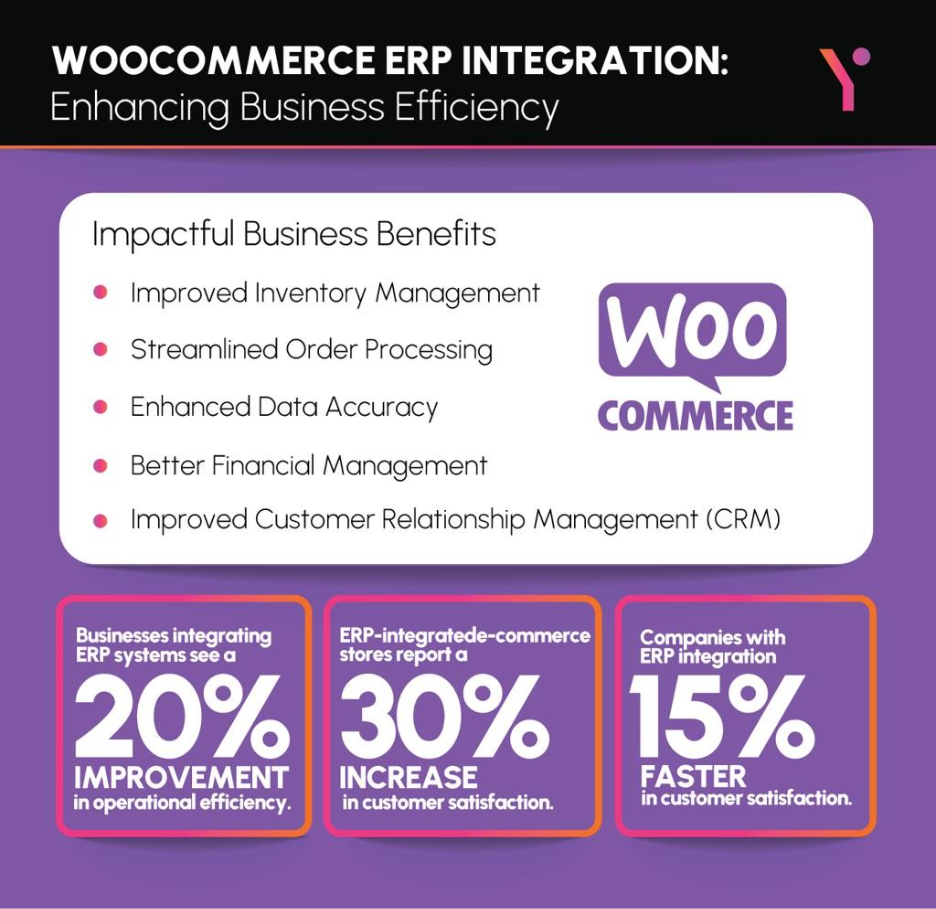
WooCommerce stores benefit from ERP integration because WordPress websites often require custom workflows and flexible automation.
Common integrations include:
- SAP Business One
- Odoo ERP
- Zoho ERP
- ERPNext
Magento ERP Integration
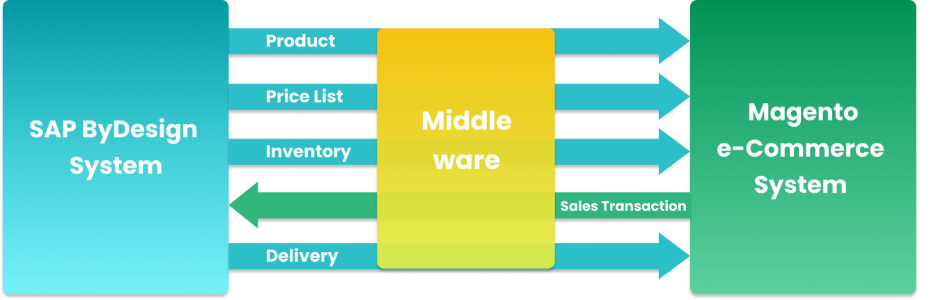
Magento is widely used by enterprise ecommerce businesses.
ERP integration helps Magento stores manage:
- Complex inventory
- Enterprise logistics
- B2B pricing
- Advanced reporting
Most Important ERP Features for Ecommerce Businesses
Inventory Synchronization
A strong ERP should:
- Sync stock instantly
- Handle multiple warehouses
- Manage SKU variations
- Support returns
Order Management Automation
Look for:
- Automatic order creation
- Shipment tracking
- Invoice generation
- Returns processing
CRM Integration
ERP systems with CRM capabilities help businesses:
- Track customer history
- Improve personalization
- Manage support workflows
- Increase retention
If your business also needs automation and AI workflows, integrating systems with intelligent assistants can improve operations further. Related guide: AI agents for business.
If your business also needs automation and AI workflows, integrating systems with intelligent assistants can improve operations further. Related guide: AI agents for business.
Analytics & Reporting
ERP dashboards provide insights into:
- Revenue
- Inventory turnover
- Customer behavior
- Profit margins
- Operational bottlenecks
Data-driven decisions become easier.
Common Challenges in ERP Ecommerce Integration
High Initial Setup Costs
ERP implementation can require:
- Development resources
- Data migration
- Workflow restructuring
- Staff training
However, businesses usually recover costs through improved efficiency.
Data Synchronization Issues
Poor integration setups can create:
- Duplicate records
- Delayed inventory updates
- Pricing mismatches
This is why experienced integration specialists matter.
Legacy System Compatibility
Older ERP systems may not integrate smoothly with modern ecommerce platforms.
Custom APIs and middleware are often required.
Real-World Example: Ecommerce ERP Integration in Action
Imagine an online bicycle accessories store handling:
- Shopify sales
- Amazon marketplace orders
- Warehouse inventory
- International shipping
Without ERP integration:
- Staff manually update inventory
- Orders get delayed
- Overselling happens frequently
- Accounting becomes chaotic
After ERP integration:
- Inventory updates automatically
- Orders process instantly
- Financial reporting improves
- Customer satisfaction increases
This is why growing ecommerce businesses prioritize automation.
Best ERP Systems for Ecommerce Businesses in 2026
| ERP System | Best For | Strength |
|---|---|---|
| NetSuite | Large ecommerce brands | Advanced automation |
| Odoo ERP | SMBs & startups | Flexible customization |
| SAP Business One | Enterprises | Supply chain management |
| Microsoft Dynamics 365 | Omnichannel businesses | Deep integrations |
| ERPNext | Budget-conscious businesses | Open-source flexibility |
| Acumatica | Growing ecommerce stores | Cloud scalability |

How to Choose the Right ERP Integration Partner
Choosing the wrong integration team can create expensive operational problems.
Look for a partner with:
- Ecommerce experience
- ERP expertise
- API integration knowledge
- Automation strategy skills
- Long-term support capabilities
Ask questions like:
- Have they integrated similar systems before?
- Do they understand ecommerce workflows?
- Can they customize integrations?
- Do they provide ongoing maintenance?
CTA: Need Ecommerce ERP Integration Support?
If you want to automate your ecommerce operations, improve inventory accuracy, and scale your online business efficiently, working with experienced ecommerce developers can save months of technical frustration. Hire ERP & Ecommerce Integration Experts
Get help with:
- Shopify ERP integration
- WooCommerce automation
- Custom API development
- Ecommerce workflow automation
- Inventory synchronization
- CRM & ERP systems
- WooCommerce automation
Future Trends in Ecommerce ERP Integration
AI-Powered ERP Automation
AI is transforming ERP systems through:
- Predictive inventory forecasting
- Automated customer support
- Smart analytics
- Demand prediction
Businesses increasingly combine ERP systems with AI chatbot development and intelligent workflow automation.
Headless Commerce Integration
Modern ecommerce stores now use:
- Headless commerce
- API-first architecture
- Cloud ERP systems
This improves speed, flexibility, and scalability.
Omnichannel Commerce Expansion
ERP systems are becoming central hubs for:
- Ecommerce stores
- Mobile apps
- Retail POS systems
- Marketplaces
- Social commerce
Unified commerce is becoming the new standard.
ERP Integration vs Manual Ecommerce Operations
| Feature | Manual Operations | ERP Integration |
|---|---|---|
| Inventory Updates | Manual | Automatic |
| Order Processing | Slow | Real-time |
| Financial Reporting | Error-prone | Accurate |
| Scaling Capability | Limited | High |
| Customer Experience | Inconsistent | Streamlined |
| Multi-channel Selling | Difficult | Centralized |
Frequently Asked Questions (FAQ)
ERP integration in ecommerce connects your online store with backend business systems like inventory, accounting, CRM, and logistics. This automation improves operational efficiency and reduces manual work.
The best ERP depends on your business size and requirements. Popular choices include NetSuite, Odoo, SAP Business One, Microsoft Dynamics 365, and ERPNext.
Costs vary based on:
Ecommerce platform
ERP complexity
Customization requirements
API integrations
Business size
Small integrations may cost a few thousand dollars, while enterprise systems can require larger investments.
Yes. Shopify integrates with many ERP systems including NetSuite, Odoo, SAP, Microsoft Dynamics, and Acumatica.
ERP integration helps businesses:
Automate workflows
Improve inventory management
Reduce operational errors
Scale efficiently
Improve customer experience
Growing ecommerce businesses often hit operational bottlenecks because disconnected systems cannot scale efficiently.
If you need Custom ecommerce automation ,CRM workflows , Inventory synchronization , ERP integrations , ERP integrations. You can work directly with experienced developers her
Conclusion
Ecommerce website integration with ERP is no longer optional for growing online businesses.
As ecommerce operations become more complex, businesses need centralized systems that automate inventory, accounting, fulfillment, customer management, and reporting.
The right ERP integration:
- Saves operational time
- Reduces costly errors
- Improves customer experience
- Supports long-term scaling
- Creates better decision-making through real-time data
Whether you run a Shopify store, WooCommerce website, or enterprise Magento platform, ERP integration can dramatically improve operational efficiency and business growth potential.
If you’re planning to modernize your ecommerce operations, now is the ideal time to invest in scalable ERP automation and intelligent business workflows.
Looking for a reliable ecommerce ERP integration expert for your business?
Get scalable ecommerce automation solutions tailored to your business growth goals.
Frequently Asked Questions
What is ERP integration in ecommerce?
Which ERP is best for ecommerce websites?
How much does ecommerce ERP integration cost?
Ecommerce platform
ERP complexity
Customization requirements
API integrations
Business size
Small integrations may cost a few thousand dollars, while enterprise systems can require larger investments.
Can Shopify integrate with ERP systems?
Why do ecommerce businesses need ERP integration?
Automate workflows
Improve inventory management
Reduce operational errors
Scale efficiently
Improve customer experience